Frost Valley™: Merge & Story
- 4.8
- Rating
- 10.00M
- Installs
- Free
- Price

 Analysis by App-foxy
I went into Frost Valley™ expecting a relaxed merge game, but what held my attention was the way each small action feeds into the next story beat. This is a casual game from LITEORANGE CREATION PTE. LTD. that places merging inside a wintry setting, with the broader aim of bringing a damaged valley back to life. It is free to start, rated Teen, and has already built a sizeable audience, with a 4.8 average from around 92 thousand ratings and over 5 million installs.
The important thing is that the game does not rely on merging as an isolated puzzle. I am constantly deciding which items deserve space, which combinations should happen immediately, and which pieces are better left untouched until a task gives them more value. That makes the board feel less like a passive collection of objects and more like a small workbench connected to the valley’s recovery.
After spending time with it, I see the appeal clearly: this is best for players who enjoy gentle progress, visible restoration, and short sessions that can stretch into longer ones when a new objective appears. It is less suitable if you want a demanding puzzle with strict timers, complex strategy, or a story that moves independently of resource work.
You May Also Like

 Blood Strike: 2.5 Anniversary
Blood Strike’s Loadouts Turn Every Drop Into a Tactical Gamble
A close look at Blood Strike’s custom loadouts: how fast access to signature weapons reshapes its battle royale rhythm, rewards preparation, and narrows the gap between fights.

 Pandora - Music & Podcasts
Pandora’s Music Is Easy to Start, but Harder to Recover
Pandora’s strength is its low-effort path from a seed to a station. Its weak spot is how much confidence it asks you to place in connection, setup, and quiet recovery.

 8 Ball Pool
 Is Built on Rivalries, Rematches, and Routine
A close look at the rivalries, rematches, shared routines, and unanswered safety questions that turn a quick pool match into a persistent mobile community.

 Samsung Music
’s Quiet Strength Is Playing What You Already Own
Its reach comes less from spectacle than from dependable access to a personal library. That simplicity is both the app’s strongest retention engine and its ceiling.

 AccuWeather: Weather Radar
AccuWeather Review: A Quick, Clear Forecast for Everyday Decisions
For everyday plans, the best forecast is the one you can understand quickly. AccuWeather makes rain timing, radar, and local conditions easy to act on, with a few trade-offs.

 Hill Climb Racing
Why Hill Climb Racing Still Turns Crashes Into One More Run
A tiny car, a bumpy hill and one more upgrade: Hill Climb Racing keeps resurfacing because its simple chaos makes every near-miss feel personal.
More From Our News Desk
View All News


One small merge is enough to start the engine
The first action is deliberately simple. I bring matching pieces together, watch them turn into something more useful, and then use that result to support the next piece of progress. That immediate transformation is the central pleasure of the game. There is no long explanation needed before the board begins responding to me.
What makes the opening action more interesting than ordinary tile matching is the context around it. A merge is not just a score-producing move. It can help clear a task, provide a needed material, or move the surrounding restoration forward. The result gives the action a purpose, even when the individual pieces are familiar to anyone who has played this genre.
I found it helpful to resist the urge to combine everything immediately. Early merges are satisfying, but the board can become awkward when every available item is consumed without considering the next objective. My most reliable approach was to look at the current request first, identify the chain needed to satisfy it, and only then spend spare pieces on larger combinations. That habit reduces the feeling of running out of useful options.
This is one of the game’s less obvious lessons: space is a resource, not just a place to store items. A crowded board can make an easy task feel difficult because the useful pieces are surrounded by things I am not ready to merge. Leaving a few flexible items available often helped more than chasing the biggest possible combination.
Why the board feels more personal than a standard merge puzzle
The Frost Valley setting gives the loop a destination. Instead of merging simply to watch a number rise, I am working toward a more visible change in the environment. That connection matters because it turns repeated actions into a form of maintenance. The valley becomes a reason to return, while the merge board supplies the hands-on activity.
I also liked that the game’s tone is calmer than many casual titles that constantly push urgency. The setting encourages me to think in small steps: make a useful combination, complete a request, inspect what changed, and decide whether I want to continue. It is a comfortable rhythm for a commute, a quiet break, or the few minutes before bed, although players sensitive to ongoing progression systems may still find the repeated resource cycle familiar.
The developer presents the game as a combination of merging and meaningful stories, and that description is most convincing when the restoration objective gives a merge a clear emotional or visual consequence. The story does not replace the puzzle loop; it gives the loop a reason to exist. If you mainly want an abstract matching challenge, that extra layer may feel like an interruption. If you enjoy seeing a place gradually improve, it adds welcome direction.
The feedback rhythm keeps each move understandable
Good casual design depends on quick feedback, and this game generally understands that. I make a combination, receive a more advanced item, and can immediately judge whether it helps with the current goal. That action-and-response pattern makes the board readable even when several tasks are competing for attention.
The best rhythm is a short chain: I inspect the request, merge toward it, see the new item appear, and use the result to unlock the next step. The reward is not always dramatic, but the board tells me that the move mattered. That clarity is valuable for a game intended to be played in small pieces because I do not need to reconstruct a complicated plan every time I return.
There is also a useful distinction between a productive merge and a merely attractive one. A larger item can look like progress, but if it does not serve the active objective, it may only occupy valuable space. I began treating every merge as a choice between immediate usefulness and future flexibility. That made the game more strategic without turning it into a stressful puzzle.
My practical tip is to keep one part of the board open whenever possible. I used the open area as a buffer for newly generated pieces and avoided filling it with low-priority items. This is especially helpful when a task asks for several steps in the same chain. The open space gives me room to react instead of forcing a premature merge that may leave the wrong item behind.
Where the satisfying rhythm slows down
The same structure that makes the game approachable can also make it feel repetitive. Once I understood the basic merge chains, the challenge came less from discovering what to do and more from managing the order of actions. Players who want constant novelty may find the repeated gather-and-combine pattern too familiar after longer sessions.
I also noticed that progress feels best when I accept the game’s intended pace. Trying to rush through several objectives at once can create friction, especially when the board is full or the needed chain is not immediately available. The game rewards patience more than aggressive play. That is a strength for a relaxing experience, but a weakness for anyone looking for fast, decisive rounds.
The Teen rating is worth keeping in mind for households choosing games for younger players. I would not treat the gentle presentation as a guarantee that it fits every child. Parents should make their own decision based on the player’s age and comfort with the game’s themes and progression style.
Rewards work best when they lead to a visible change
The most effective reward in Frost Valley is not simply receiving another object. It is seeing that object contribute to a task or to the valley’s improvement. When a merge leads somewhere visible, the effort feels worthwhile. I am not just cleaning up a board; I am helping create the next piece of the setting.
That structure gives the game a useful sense of scale. A single action is small, but several successful actions form a clear chain of progress. I can finish a minor request, use its result on a larger one, and then see the environment move forward. The reward therefore has two layers: the immediate satisfaction of the merge and the longer-term payoff of restoration.
For everyday play, this makes the game easy to fit around interruptions. If I only have a few minutes, I can aim for one manageable task rather than opening the game with the expectation of completing a major section. If I have more time, the completed task naturally suggests another one. That is a better reason to continue than an endless stream of unrelated rewards because the next session has a visible purpose.
There is a trade-off, though. Players who prefer direct control over every aspect of a game may find the objective-driven structure restrictive. The board often encourages me toward the item needed for the current request, so experimentation is not always the most efficient route. I enjoyed that guidance, but I can see why someone who likes building a personal strategy without prompts might prefer a more open-ended merge title.
How I handled limited attention and limited patience
My most useful workflow was to separate “must do now” pieces from “nice to have” pieces. I focused first on the chain connected to the active request, kept flexible items aside, and used spare moments to prepare rather than forcing a completion. This approach made the game feel less wasteful and reduced the number of times I had to rebuild a chain from the beginning.
I also avoided judging a session by how many visible changes I made. Some sessions were valuable because they prepared the board for a later objective, even when the valley did not visibly change right away. That is an important expectation to set: the game’s satisfaction comes from cumulative progress, not from making every visit feel like a major chapter.
The free entry point makes it easy to test that rhythm for yourself. There are in-app purchases ranging from $0.99 to $99.99 per item, so I would recommend deciding early whether you want to play within the natural pace or spend to accelerate parts of the experience. For me, the game is more enjoyable when I treat waiting and preparation as part of the design rather than as a problem to solve with purchases.
Every session resets the question without erasing the goal
A good return loop needs to answer one question: why open the game again? Here, the answer is usually a combination of an unfinished request, a board that can now be organized more effectively, and the promise of another visible step in Frost Valley. I can stop after a short chain and still know what I want to do next time.
The reset is gentle rather than dramatic. I do not return to a completely new game state each time. Instead, I come back to the same broader restoration journey with a slightly different set of immediate decisions. That continuity is what makes the game feel comfortable for routine play. It is easy to remember the larger purpose even when I have been away for a while.
This also explains why the game works better as a daily habit than as a single long challenge. A long uninterrupted session can expose the repetition in the merge cycle, while shorter visits keep the feedback fresh. I would recommend it to someone who enjoys checking in, making a few deliberate moves, and leaving with a small sense of completion.
On the other hand, I would skip it if I wanted a game that respects only my available time and never asks me to manage a gradual progression. The loop is built around accumulation. It expects me to care about what happens after the current merge, not just whether the present move is entertaining. Players looking for instant, self-contained rounds may find that structure too slow.
Who should download it and who should look elsewhere
I would recommend Frost Valley to players who like casual merge games with a story-led reason to keep organizing the board. It is particularly well suited to people who enjoy restoration themes, incremental goals, and a calm pace. It also makes sense for anyone who wants a game that can be played in brief visits without demanding a complicated tutorial every time.
I would be more cautious about recommending it to competitive puzzle players. The appeal is not based on high-pressure timing, deep tactical variety, or a constantly changing ruleset. Likewise, if you dislike in-app purchase systems in free games, you should approach it with a clear personal limit. The game can be entered without paying, but the presence of optional purchases means its progression model may not suit everyone.
Compared with a conventional match-three game, this feels less focused on clearing a fixed board for a high score. Compared with a pure merge title, it gives the combinations more narrative direction through the valley. That middle ground is its identity. It is not the best replacement for a fast arcade puzzle, and it is not trying to be a full management simulation. Its strength is the connection between a small merge and a larger restoration goal.
My verdict on the complete action-to-return loop
Frost Valley works because its loop is easy to understand but not completely mindless. I take an action by merging, receive immediate feedback through the new item and task progress, earn a reward that points toward restoration, and then reach a natural stopping point. When I return, the unfinished valley gives me a reason to begin again.
The game’s strongest quality is that it makes modest progress feel meaningful. A single combination rarely changes everything, but it can remove a bottleneck, open space, or move a request closer to completion. Those small decisions add up. I especially appreciated the way careful board management matters more than blindly chasing the largest merge.
Its limitations are equally clear. The core activity can become repetitive, the relaxed pace will not satisfy everyone, and players need to be comfortable with a free-to-play structure that includes purchases from $0.99 to $99.99 per item. The story and restoration setting improve the loop, but they do not transform it into a radically different genre.
The current version is 1.7.10, and the game supports Android 7.0 and later. With its free starting point, 5M-plus installs, and strong average rating, it is easy to see why it has found an audience. My recommendation is straightforward: try it if you want a gentle, goal-driven merge game and enjoy returning to the same world in small steps. Skip it if you need intense challenge, completely open-ended play, or a session structure with no repetition.
For me, the reason another session begins is simple: there is usually one more useful merge to make, one more request to complete, and one more part of the valley waiting to look a little more alive. That modest promise is exactly where the game is at its best.
FAQs for Frost Valley™: Merge & Story
01What is Frost Valley™: Merge & Story about?
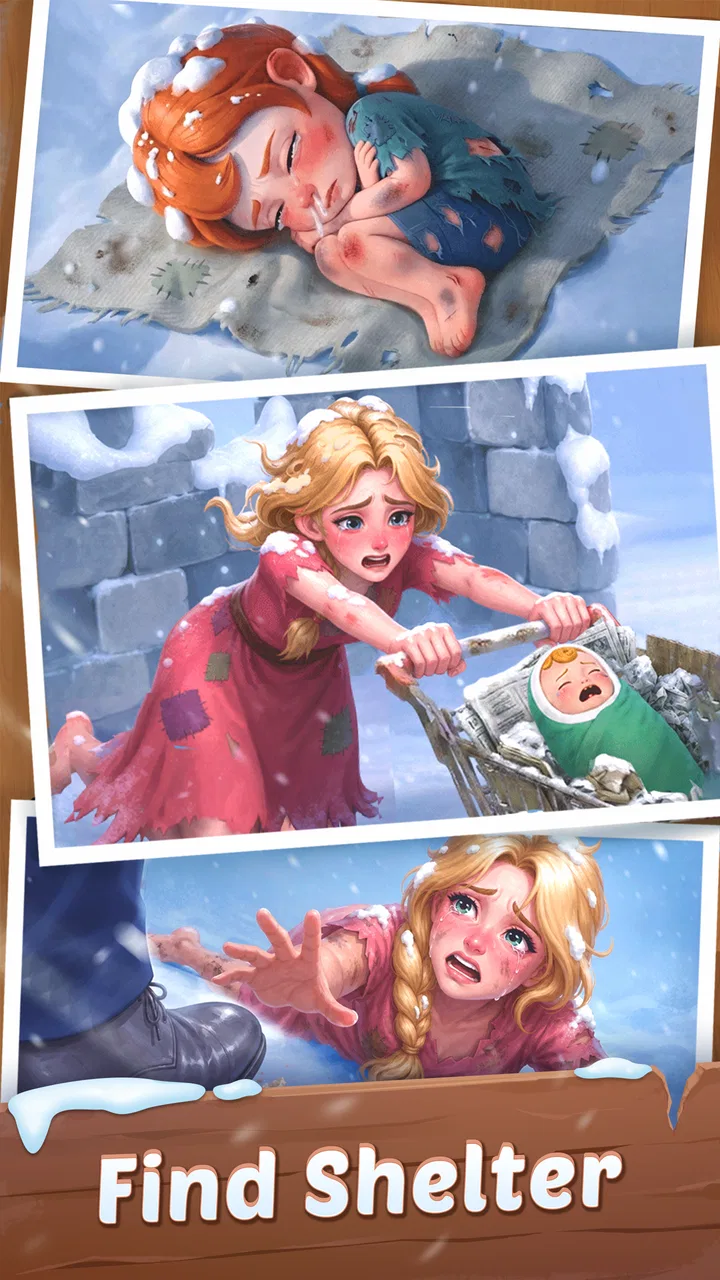
Frost Valley™: Merge & Story is a casual merge-and-adventure game built around restoring a frozen valley and uncovering its story. You combine matching items to create upgraded materials, complete tasks, renovate locations, and help characters rebuild their community. The game mixes relaxing puzzle mechanics with exploration, narrative events, and gradual progression, making it suitable for players who enjoy decorative and story-driven mobile games.
02How does the merging gameplay work in Frost Valley™: Merge & Story?
The main gameplay involves dragging identical objects together to merge them into a more advanced item. These upgraded items are then used to complete orders, clear obstacles, fulfill character requests, and unlock improvements around the valley. The board can become crowded, so planning your combinations and keeping enough free space is important. Energy and available resources also influence how quickly you can progress.
03Is Frost Valley™: Merge & Story free to download and play?
Frost Valley™: Merge & Story can generally be downloaded and played without an upfront purchase, but it may include optional in-app purchases. These purchases can provide extra energy, boosters, currency, or other useful resources that speed up progress. The game is designed to be playable for free, although players who want faster restoration or more frequent sessions may encounter offers for additional items.
04Does Frost Valley™: Merge & Story require an internet connection?
An internet connection may be needed for some features of Frost Valley™: Merge & Story, including loading events, synchronizing progress, receiving updates, displaying advertisements, or processing purchases. Basic gameplay availability can depend on the version installed and the developer’s current requirements. Before traveling or playing offline, it is best to test the game without a connection, since certain functions may not work properly.
05Is Frost Valley™: Merge & Story suitable for children and casual players?
The game is approachable for casual players because its core controls are simple: collect objects, merge matching items, complete tasks, and restore the valley. However, parents should review the store rating, privacy information, advertising practices, and in-app purchase settings before allowing younger children to play. Progress systems, timed offers, and optional purchases may encourage longer sessions, so parental controls can be useful.
Pros
- Relaxing merge gameplay suited to short
- casual sessions.
- Story-driven tasks give progression beyond simply combining items.
- Colorful artwork creates a cozy
- welcoming atmosphere.
- Regular rewards help maintain momentum during early progression.
- Easy controls make it accessible for players of different ages.
Cons
- Energy limits can interrupt play when you become invested in a task.
- Later objectives may require repeated merging and feel somewhat grindy.
- Some upgrades and progress can depend heavily on scarce resources.
- The small-screen interface may feel crowded during larger merge chains.
- Optional purchases may be tempting for players seeking faster progress.

Frost Valley™: Merge & Story
Gallery